
ACV Auctions · ACV Drops · Case study
How I redesigned a marketplace to move inventory to the buyers who wanted it.
From 341,587 listings to one that fits. A personalized buy plan that does the navigating so dealers stop guessing and start landing the cars that move.
How I led the design for ACV Drops end-to-end
Owned the concept end-to-end: seller handoff, the platform's timing decision, buyer discovery, notifications, and the SRP.
Product owners across Launch, Purchase, Sold, and Notifications. No one PO owned "the Drop," so I translated the vision into what each roadmap could carry.
Worked closely with a UX researcher whose six years of dealer interviews grounded the work. The concept came from the buyers before it came from a strategy deck.
Some regions sit on inventory. Others can't find what fits.
Our current marketplace structure is hurting buyers and sellers in some regions who have limited inventory and buyers within those regions. Our goal was to bring the inventory to the buyers in a more predictable manner.
Strongest regions sell-through
Weakest regions sell-through
Vehicles unsold in 90 days · regional mismatch
In small regions buyers are opening up a marketplace with nearly no inventory and sellers are launching into a marketplace with no buyers.
Close the 28-point sell-through gap between our strongest and weakest regions, and move ~35K stalled vehicles into markets where buyers actually want them.

How do we meet inventory with buyers at the right time?
The first problem we had to solve was how to get this inventory launching when buyers are active — and make sure buyers were active at the right time.
01Get sellers to launch their vehicle at the right time and price
Sellers in struggling regions would be required to launch their inventory at specific times with tight pricing rules.
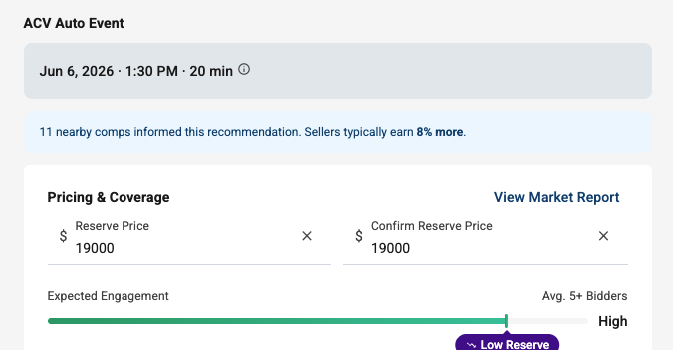
The seller side: a scheduled event slot, comps-informed pricing, and an expected-engagement meter.
02Make sure buyers were aware of the event and how it was relevant to their inventory needs
We didn't just want to send a buyer an event notification — we wanted to provide them with exactly why this vehicle matched their inventory needs based on their previous buying history, views and saved filters.
9:41
Tuesday, June 9

03Build an architecture where events are easy to find and plan for
Our current marketplace is focused on showing all auctions at once, launched at random times. I wanted to make it easy to segment event inventory from the inventory that was not in an event — something new, without changing the core of what the marketplace is today.
04Give buyers a way to plan their week around events
I wanted to give buyers a way to view vehicles relevant to their inventory needs by surfacing recommendations within events that matched their searches, purchases and views — early, through a dashboard. Reducing the overload of thousands of vehicles a dealer may never even purchase.
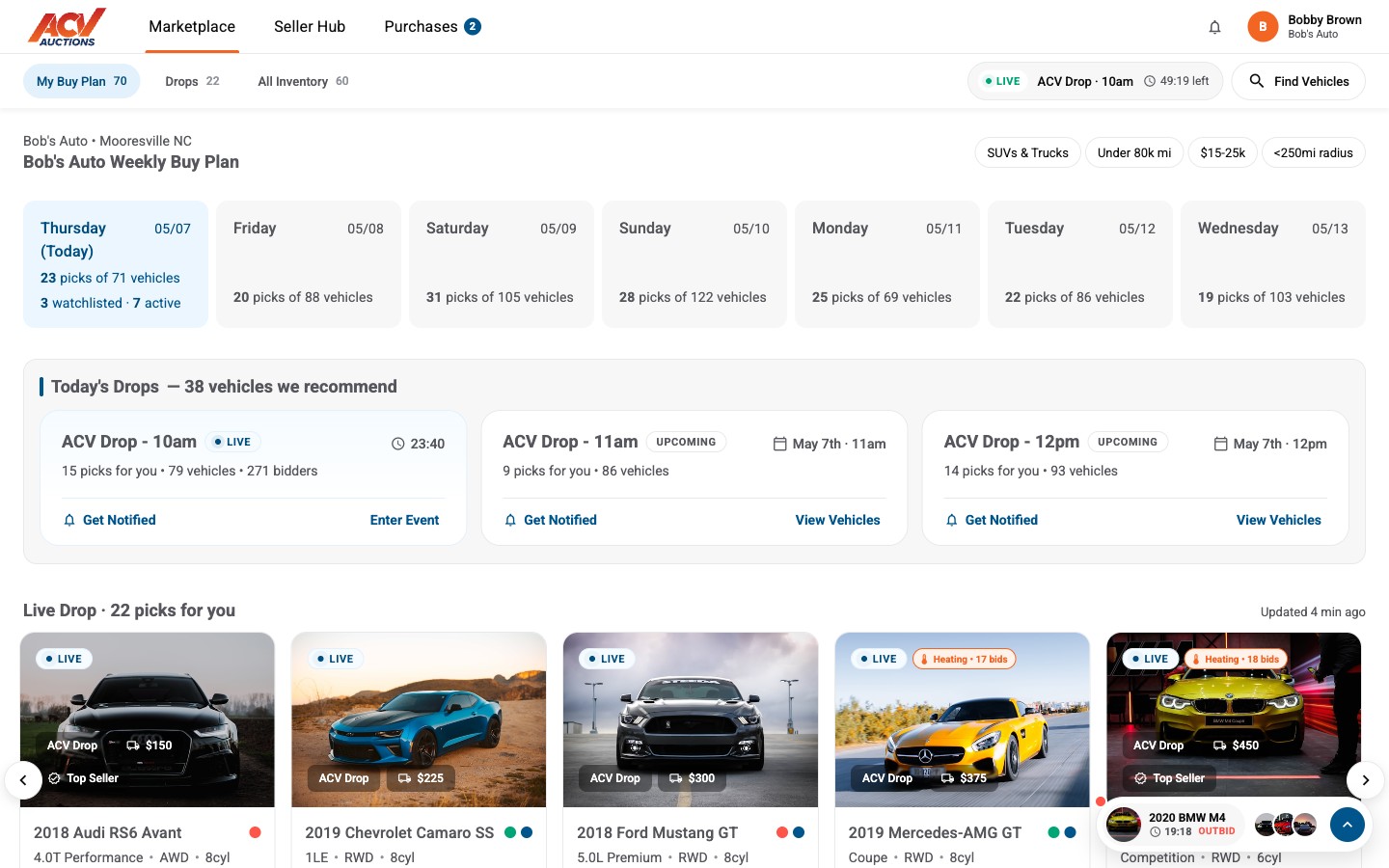
My Buy Plan — the week, planned around drops that fit.
05Event pages which highlight recommended vehicles to the buyer
Buyers get a personalized view of upcoming events and recommended inventory — curated to match their purchasing history.
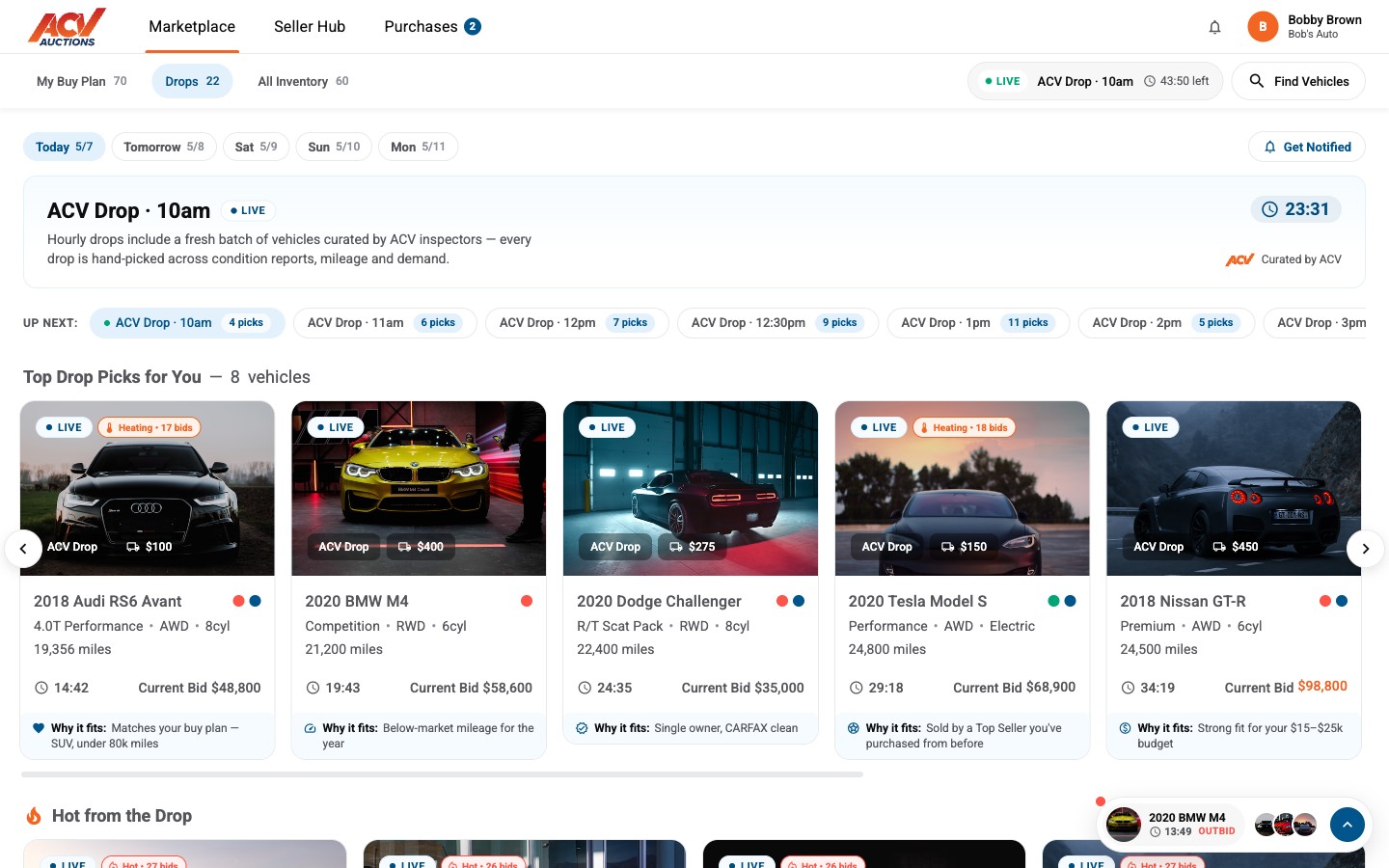
A Drop's event page — recommendations first, everything else second.
06Creating urgency and efficiency with accelerated timer and heat meter
Live drops move fast on purpose — an accelerated timer and a heat meter make activity legible at a glance, so buyers know where the action is and sellers see engagement build in real time.
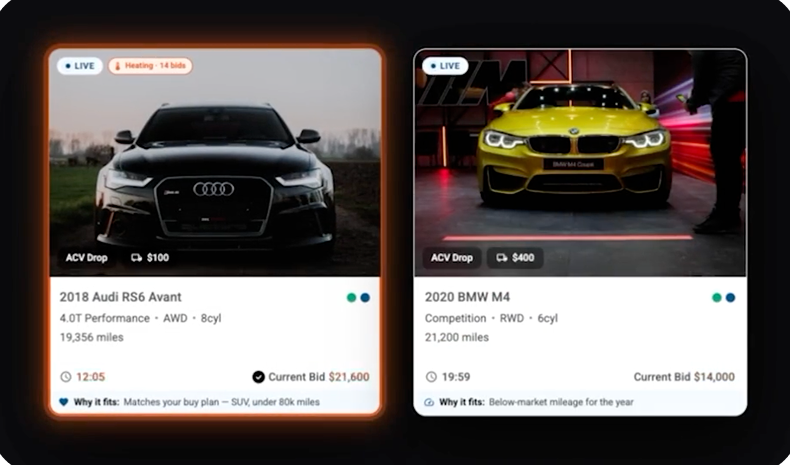
The heat meter — a heating auction literally glows, with the accelerated timer counting down beside the current bid.
Five experiences throughout the journey to support these drops — seller launch, notifications, architecture, the buy plan, and the live event itself.
Try the prototype
Open full screen ↗The full working prototype: browse the buy plan, tune the strategy, place a bid, and open the team dock in the bottom-right corner.
Testing the hypothesis
Before pitching a buy plan, I led the design on a generative study with eight dealers — from one-a-month independents to 500+/year franchise buyers — to learn how they actually shop a marketplace this big: how they search, what they save, when they bid, and where the feed lets them down.
45-minute sessions spanning franchise, multi-dealer, and independent buyers (BA-1 to BA-4)
Already use Saved Search — but an average of just ~1.7 each, a blunt, noisy stand-in for a real buy plan
Of bids from recommendations — the personalization gap; the platform almost never tells a buyer what to look at
Four problems, straight from the buyers.

The SRP is a control panel, not a decision.
Dealers scroll the feed to spot prospects, but 88% only bid after opening the full vehicle page. They want the feed to pre-qualify, not just list.
Saved Search is the closest thing to a plan, and it's blunt.
It floods them with launch alerts and can't filter by condition, so many switch notifications off — and miss the cars they actually wanted.
They buy by "core" vs. "off-brand."
Every dealer sorts the marketplace into staple brands and opportunistic off-brands — a personal buy plan they rebuild from scratch every morning.
They described Drops before we built it.
Asked what would help most, one buyer sketched the product almost exactly: a weekly email of cars launching that match my criteria. The idea came from the buyers, not a strategy deck.
"With so many 2-hour auctions running, it's easy to miss a 20-minute auction at the top of the page."
— Nate, Franchise buyer
The vision touched everything. That was the hardest part.
This project cut across rerouted seller flows, buyer notifications, the SRP, and the launch experience — with no single owner across any of it. Alignment meant selling the same story to multiple partners and trimming scope so the core could ship.
What we didn't ship
We considered a whole new marketplace. We chose a doorway instead.
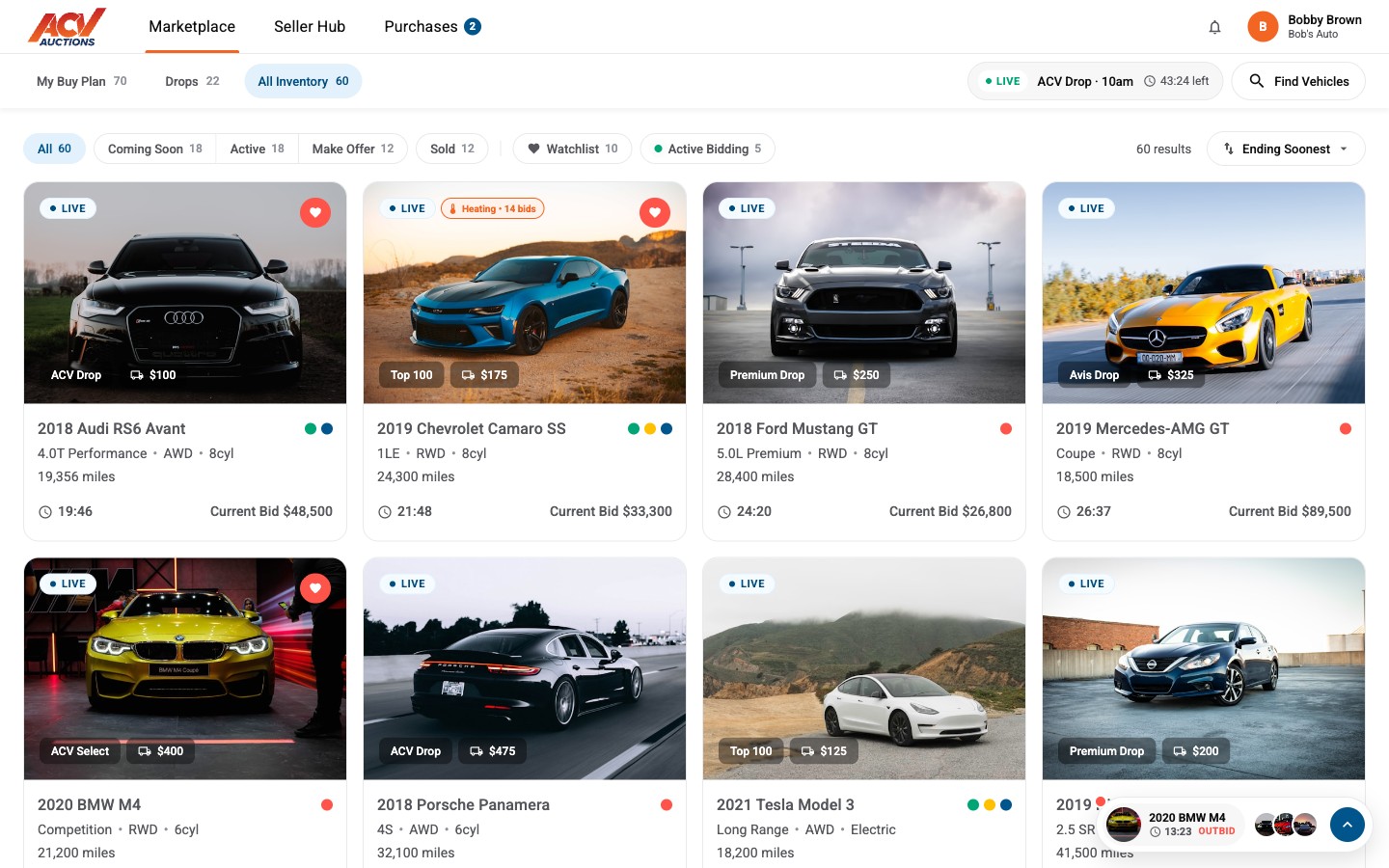
A whole new simplified marketplace.
Drops originally proposed a rebuilt home page — a dealer dashboard where buyers plan their days and see the marketplace as a personalized itinerary. We designed it, then set it aside. Ship the event mechanic first; earn the right to redesign the shell later.
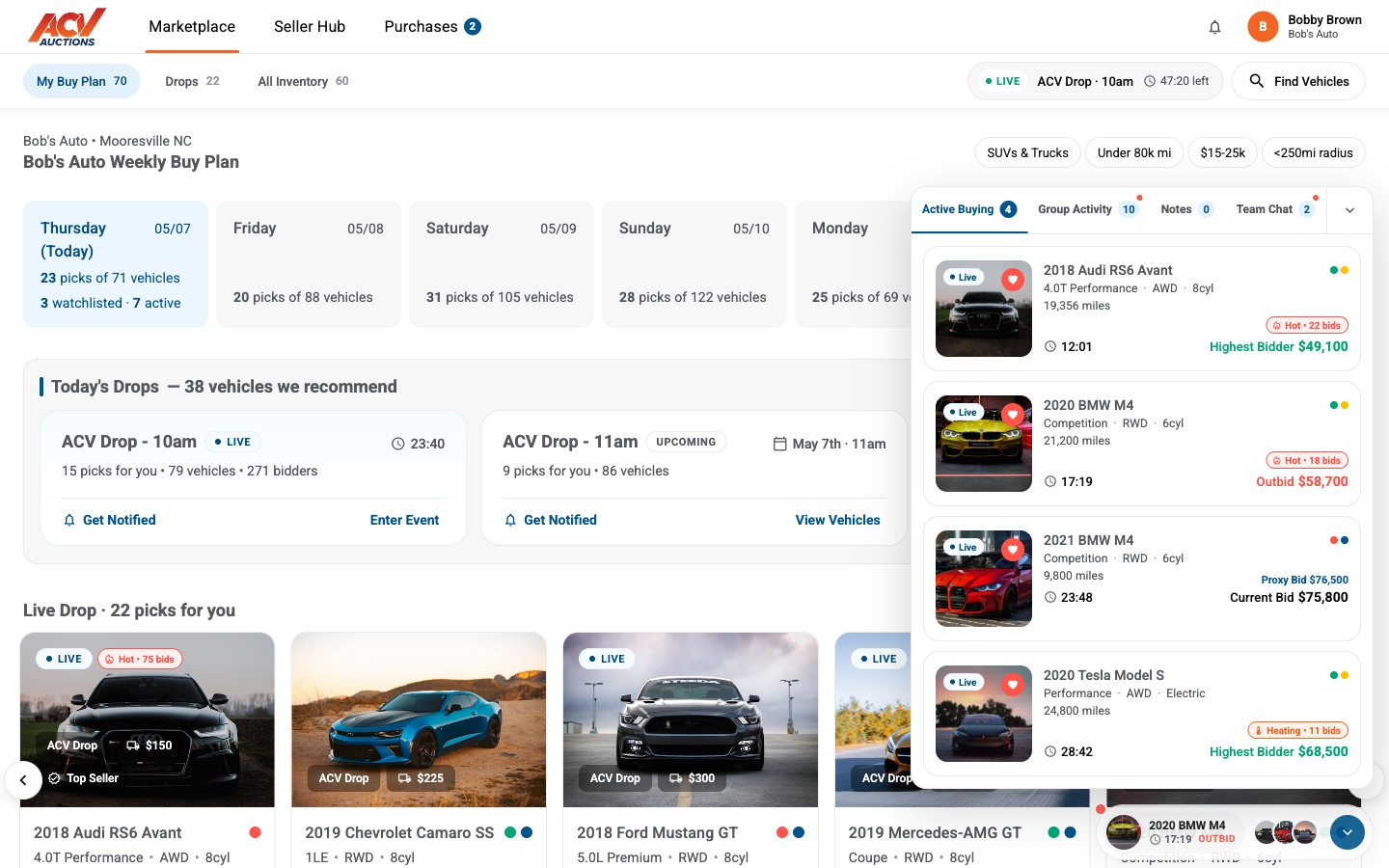
Buyer control panel
An updated version of our buyer control panel that included new ways to talk with dealers within your group, track current bids and notes on auctions. A slice of it survives — the live Activity Dock in the prototype.
The full tour
Every feature, front to back.
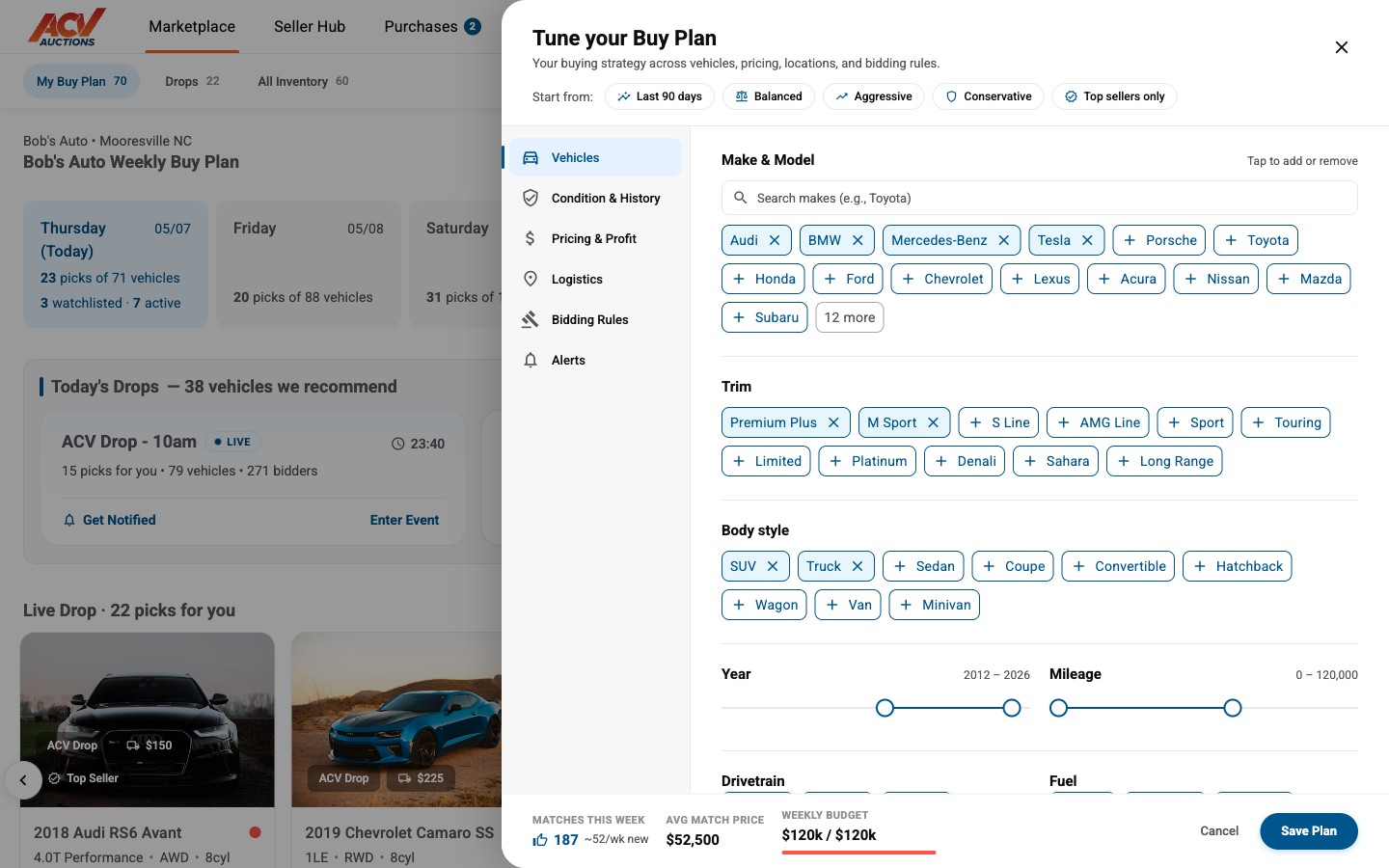
My Buy Plan
A tuned plan, not a feed
Inventory types, mileage, price band, and radius — the dealership's strategy, editable any time through Tune Buy Plan.
Plan the week
Seven days of drops with pick counts per day — the week at a glance instead of a marketplace refresh.
Live Drops, made urgent
Current bid, accelerated timer, and a heat meter that flags auctions as bidding accelerates.
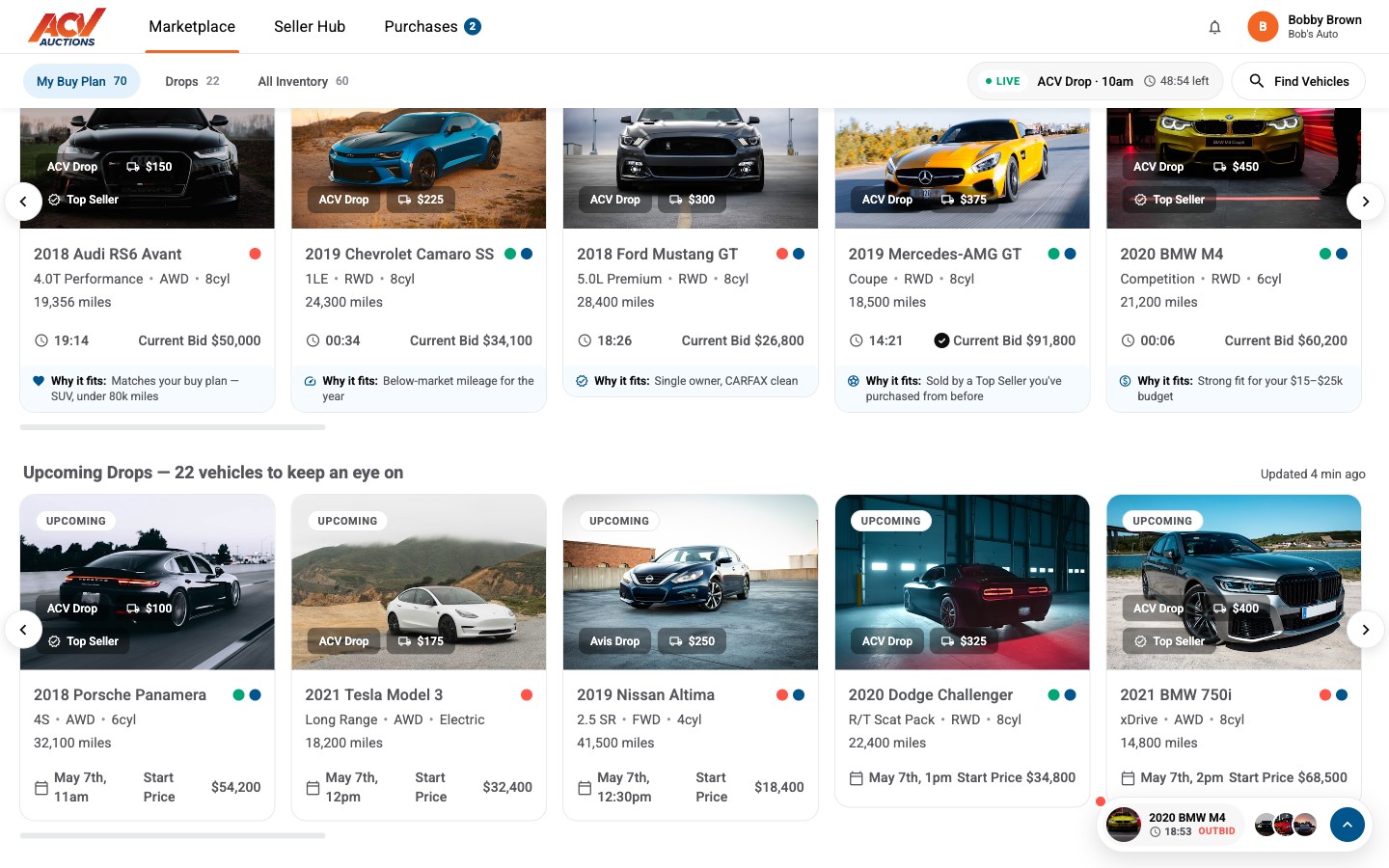
Why it fits, every time
Every recommendation carries its rationale — matched to the dealer's own purchases, searches, and store performance.
Just outside your buy box
Strong market performers one notch outside the plan — visible, never mixed in.
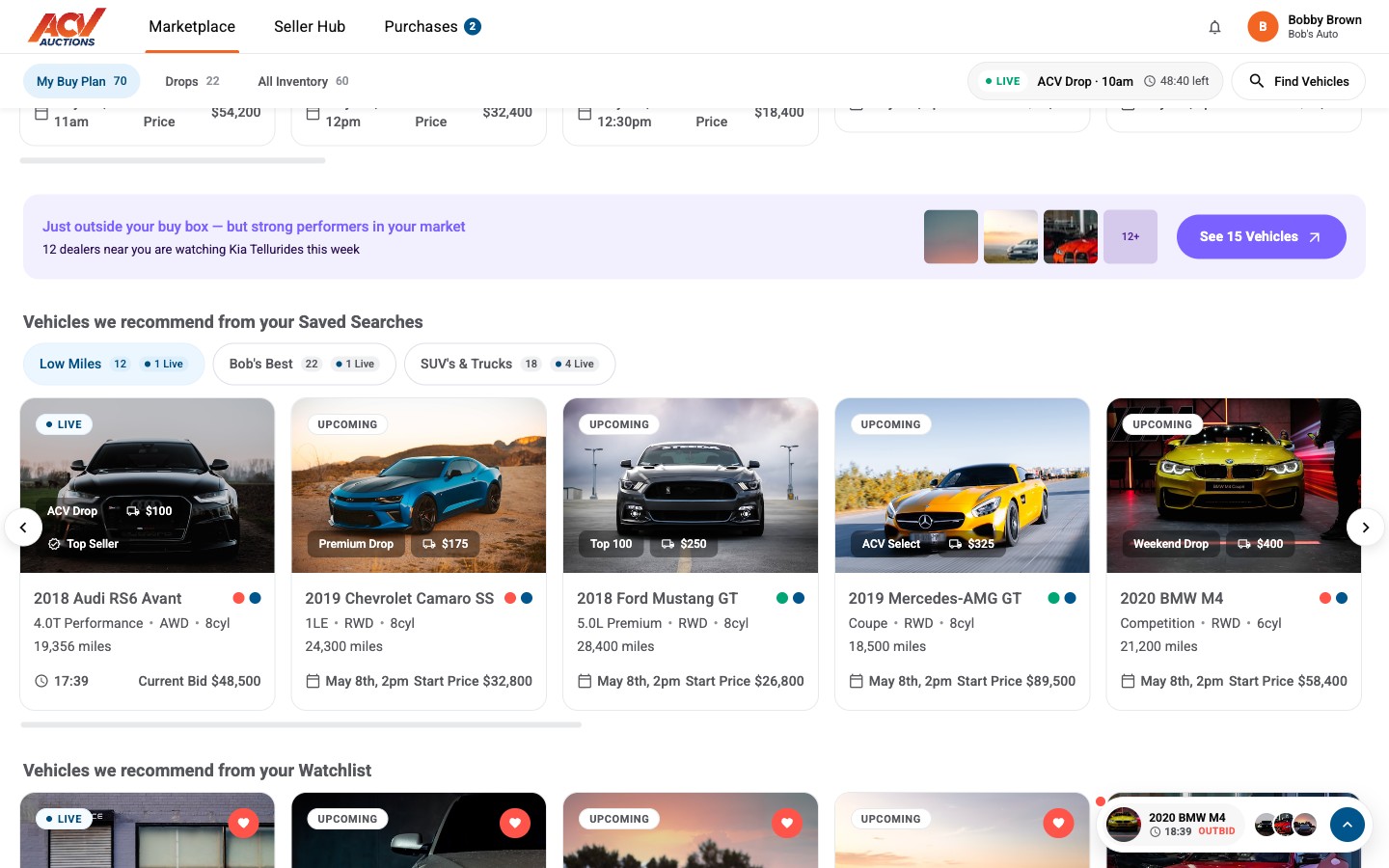
Saved Searches & Watchlist
Recommendations grouped by each saved search and the watchlist, with live counts per group.
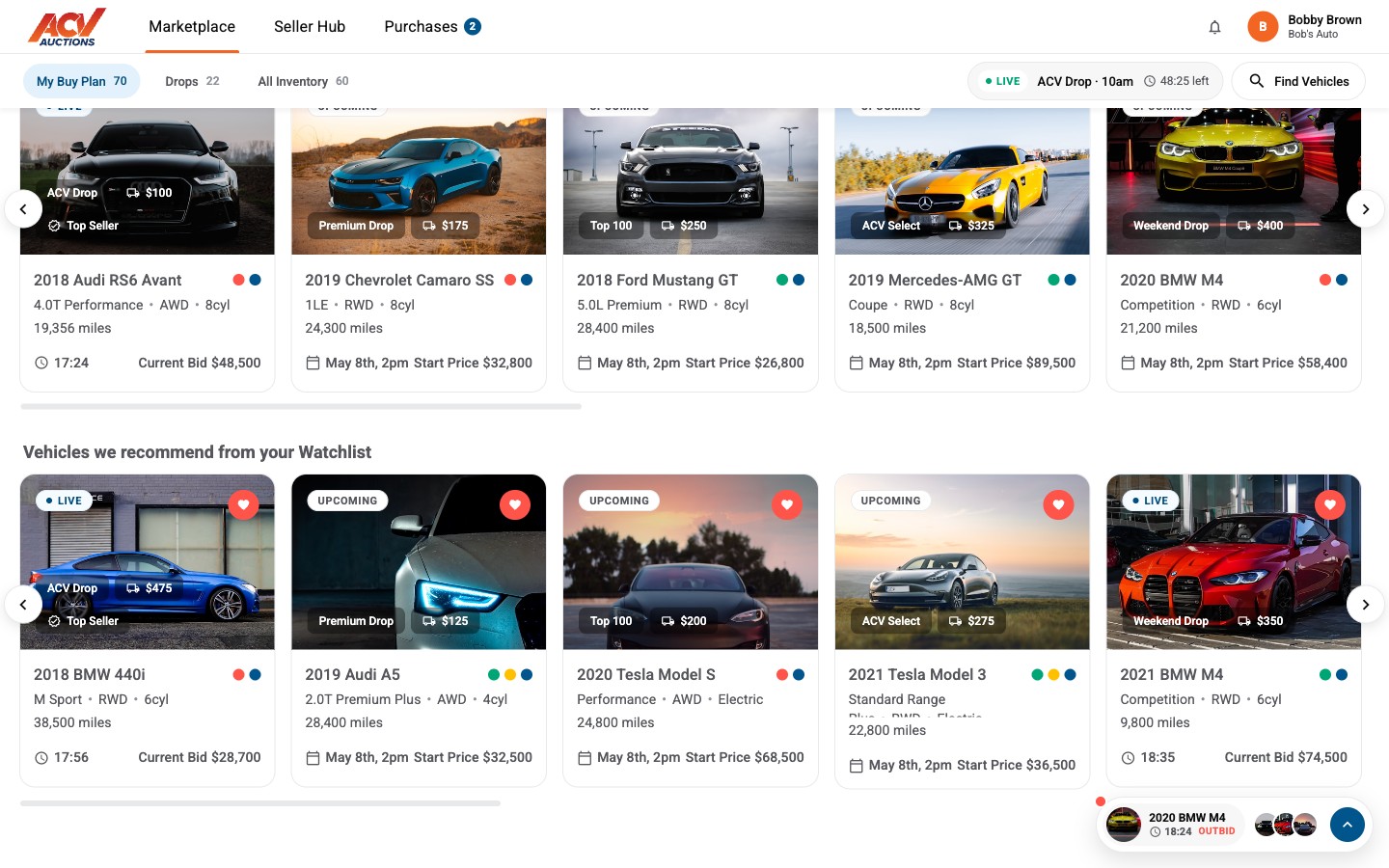
The Live Activity Dock
Current bids, outbid alerts, notes, and team chat in one persistent dock — the slice of the control panel that shipped.
Built for the team
Group activity and chat keep the whole buying team on the same auctions in real time.
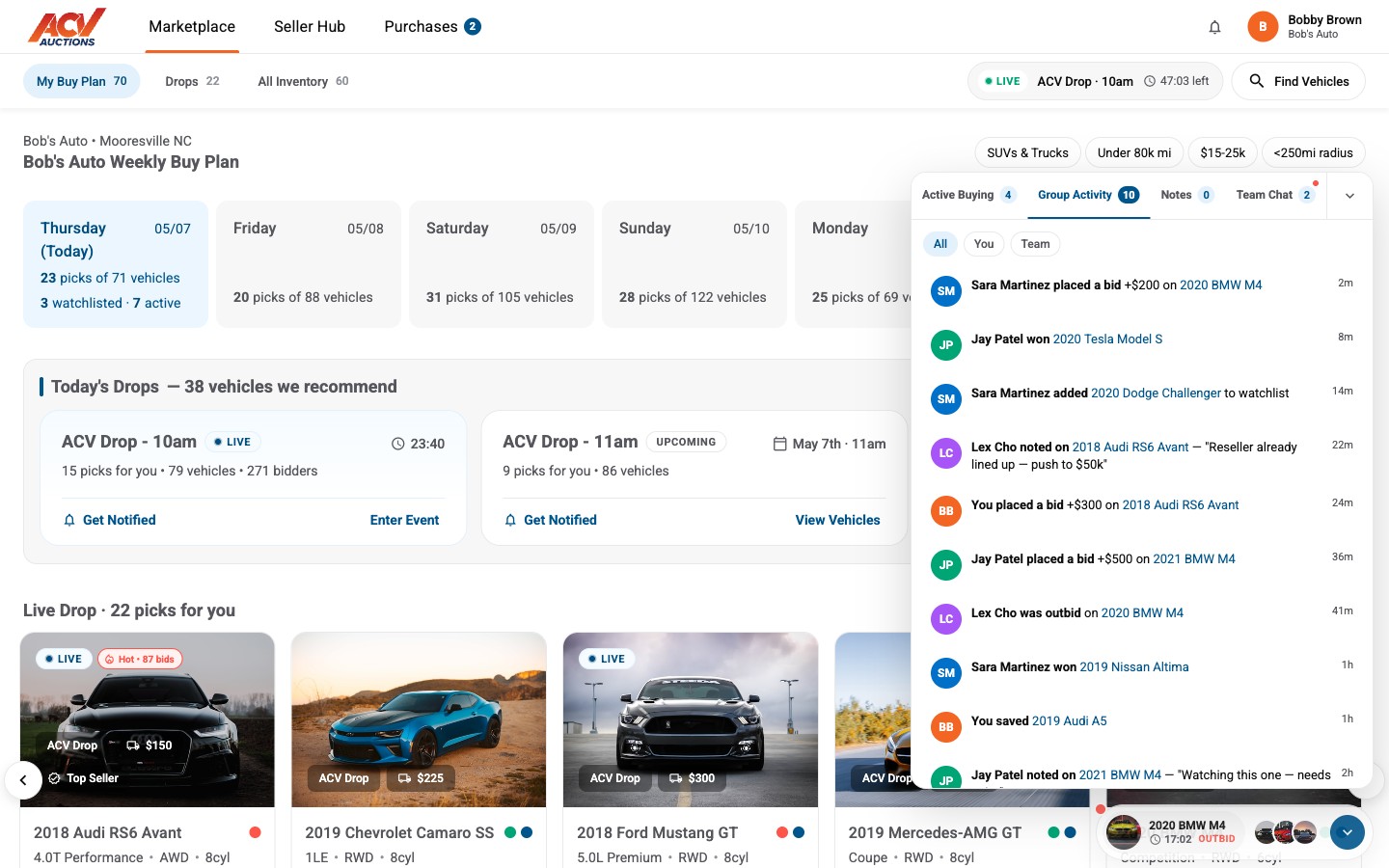
The Drops page
The event page
What this drop is, its live state and countdown — every event signed “Curated by ACV.”
Picks lead the page
Top Drop Picks come first, then the full event grid — the feed pre-qualifies instead of just listing.
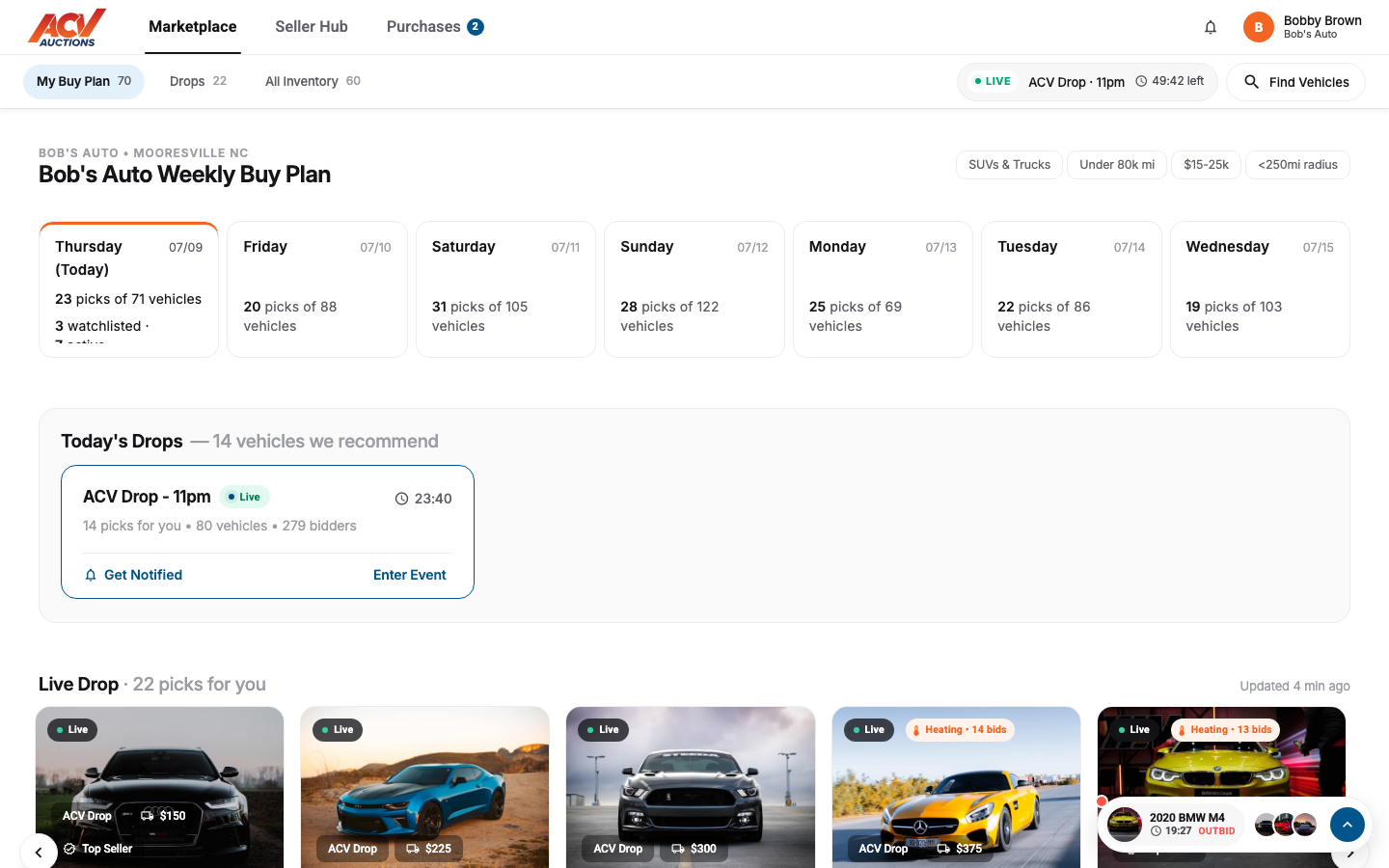
Heat you can see
A heating auction literally glows — the timer and heat meter carry through every card.
After launch
The doorway worked.
Inventory met buyers — and for the first time, the platform started telling buyers what to look at.
Sell-through growth in the weakest regions
Reduction in vehicles left unsold
Of bids now come from recommendations — up from less than 1%